A rotavator is one of the most-used machines on a Punjab farm. It goes into the field before wheat, before paddy, before vegetables, season after season. That also means a wrong choice stays with you for years: a machine too wide for your tractor, blades that wear out fast, or a PTO shaft that never quite fits.
This is not a guide on how to run a rotavator. (For that, see our rotavator guide, and if your machine is giving trouble, the problems and fixes article.) This one is for the day you are standing in front of a new machine, deciding whether to buy it. Here are nine things to check.
1. Start with your tractor, not the rotavator
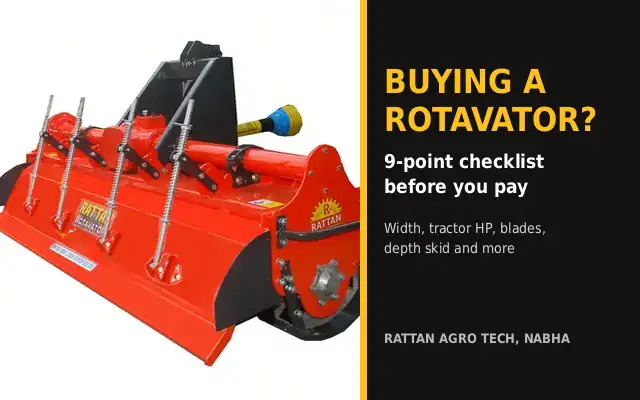
The first question is not “which rotavator?” but “what tractor will pull it?” A rotavator takes its power from the PTO, and a wider machine needs more power to turn. Rattan rotavators are made for tractors of 35 HP and above.
Note down your tractor’s model and HP before you go to the dealer. If you are close to the lower limit, or your soil is heavy, share that too. A machine matched to your tractor will work better and last longer than one that keeps the engine straining.
2. Choose the right width
Rattan rotavators come in 5 ft, 6 ft and 7 ft widths. Wider covers more ground per pass, but it also asks more from your tractor. Many farmers also like the rotavator to be at least as wide as the tractor’s rear wheels, so the wheel marks get worked over in the same pass.
Not sure which one fits? Tell us your tractor HP and field size and we will suggest the width, rather than you guessing.
3. Look closely at the blades
The blades do all the work, and they are the part that wears. Rattan rotavators use L-type blades made of hardened carbon steel for longer life. When you inspect a machine, check that all blades are fitted evenly and the bolts are tight. Also ask one simple question: will replacement blades be easy to get when these wear out?
4. Check the depth adjustment
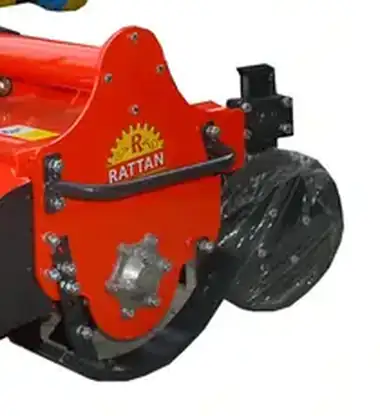
Different fields and crops need different working depths. An adjustable depth skid on each side lets you set the depth and keep it consistent across the field. Ask the dealer to show you how it adjusts. It should be simple enough to change in the field without special tools.
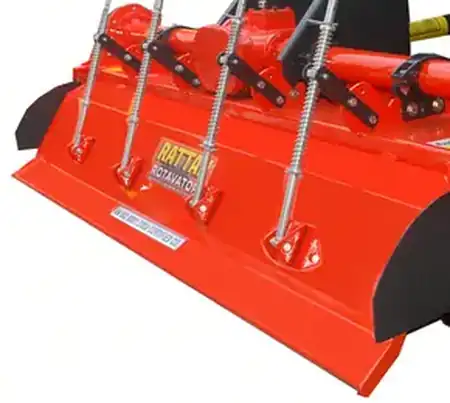
5. Don’t ignore the rear levelling board
Behind the rotor sits the rear levelling board. It smooths the soil that the blades throw up and leaves a flatter seedbed. Check that it moves freely and that its spring adjusters are complete and not bent.
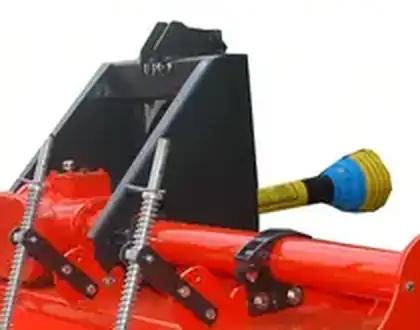
6. Gearbox, hitch and PTO shaft
Power travels from your tractor through the PTO shaft into the gearbox and then to the rotor. Before you buy, check three things:
- PTO shaft length: it must suit your tractor. Too long or too short can cause damage.
- PTO guard: the safety cover should be fitted and intact.
- Hitch points: the three-point hitch should line up with your tractor’s links.
7. Check the build quality
Walk around the machine. Look at the welds, the frame, the side plates and the paint. Clean welds and a solid frame are signs of careful manufacturing. Rattan rotavators are made at our ISO 9001:2008 certified factory in Nabha, Punjab, and you are welcome to see how they are built.
8. Ask about spares and service
A rotavator that stands idle in the middle of the sowing season costs you more than any small price difference. Before buying, find out where you will get blades, bolts and other parts, and who you will call if something goes wrong.
9. Get the paperwork right
Take a proper bill with the model and width written on it, and ask for the operating manual. If there are warranty terms, ask for them in writing. Keep these papers safe; you will need them for any claim, and sometimes for loans or government schemes.
Take this list to the dealer
☐ Width chosen (5 ft / 6 ft / 7 ft) to suit my tractor
☐ Blades fitted evenly, bolts tight, spare blades available
☐ Depth skid adjustment shown to me
☐ Rear levelling board and springs in good shape
☐ PTO shaft length suits my tractor, guard fitted
☐ Welds, frame and side plates checked
☐ I know where to get spares and service
☐ Bill, manual and any warranty terms in hand
Tip: take a screenshot of this list on your phone before you go.
Quick questions
What is the minimum tractor HP for a Rattan rotavator?
Rattan rotavators are suitable for tractors of 35 HP and above. For the exact width that suits your tractor, share your HP with us and we will recommend one.
Which widths are available?
5 ft, 6 ft and 7 ft.
Does a rotavator really save tillage passes?
A rotavator breaks, turns and mixes the soil into a seed-ready bed in one pass, which can replace several separate tillage steps and save fuel. How many passes you need still depends on your soil and its condition.
I already have a rotavator and it is giving trouble. What should I read?
See Rotavator Problems and Fixes. It covers clods, blade wear, straw wrapping and more.
Talk to the people who make it
Rattan Agro Tech has been building farm machinery in Nabha since 2008. Call or WhatsApp us with your tractor details and we will help you choose the right rotavator, with no pressure to buy.
Choosing a Rotavator?
Tell us your tractor HP and field size and we will suggest the right width. You can talk to us in Punjabi or Hindi too. ਤੁਸੀਂ ਸਾਡੇ ਨਾਲ ਪੰਜਾਬੀ ਵਿੱਚ ਵੀ ਗੱਲ ਕਰ ਸਕਦੇ ਹੋ।