Rotavator Problems and Fixes: A Troubleshooting Guide for Farmers
Rattan Agro Tech, Nabha
A rotavator is one of the hardest-working machines on a Punjab farm. When something is off, you see it straight away in the field: clods left behind, blades wearing out too fast, straw wrapping round the rotor, or the tractor struggling to pull. The good news is that most of these problems come from a handful of causes, and almost all of them can be fixed in the field.
This guide is organised by problem, so you can jump to what you are seeing. For the basics of how a rotavator works and how to choose one, read our Rotavator Guide.
Know the parts first
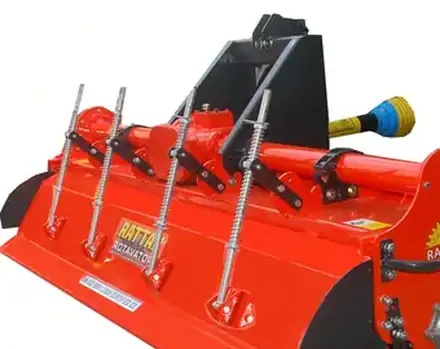
From the top: the hitch frame, the PTO shaft into the gearbox, and the spring-loaded rear levelling board.
Gearbox
Takes power from the PTO shaft
Side drive
Carries power down to the rotor
Rotor & blades
Hardened L-type blades cut and mix the soil
Depth skids
Set how deep the blades work
Levelling board
Smooths the soil behind the rotor
Common problems, causes and fixes
1. Big clods left behind
Likely cause: driving too fast, soil too dry and hard, or blades worn short.
Fix: drop to a lower gear so the blades take more cuts per metre. Work when the soil has some moisture. Check the blades and replace them if they have worn down.
2. Soil turned to fine powder
Likely cause: driving too slowly or making too many passes over dry soil.
Fix: go a gear higher and avoid unnecessary passes. Over-pulverised soil crusts after rain or irrigation and wastes diesel.
3. Straw wrapping round the rotor
Likely cause: long, wet straw or heavy residue lying in heaps.
Fix: spread the straw evenly and let it dry a little before working. Stop, switch off the PTO and engine, and clear the wrapped straw before it strains the drive. Never clear it with the PTO running.
4. Blades wearing out too fast
Likely cause: stony or very dry soil, working too deep, or loose blade bolts letting blades rock.
Fix: raise the depth skids a little, work at better moisture, and keep blade bolts tight. When blades are worn, replace the full set so the rotor stays balanced.
5. Uneven depth across the width
Likely cause: the rotavator is not level on the three-point linkage, or the two depth skids are set differently.
Fix: level the machine side to side with the linkage adjuster, and set both skids to the same height.
6. Tractor struggling and black smoke
Likely cause: working too deep, too fast a gear, or a rotavator too wide for the tractor.
Fix: reduce depth and use a lower gear. The Rattan rotavator suits tractors of 35 HP and above, and wider models need more power, so match the width to your tractor.
7. Gearbox running hot or noisy
Likely cause: low or old gearbox oil, or the machine being overloaded for long periods.
Fix: check the oil level and top up with the grade in the manual; change old oil. If the noise continues, stop using it and get it checked before it damages the gears.
8. Heavy vibration
Likely cause: a missing, bent or broken blade, or a mix of old and new blades.
Fix: stop and inspect the rotor. Replace damaged blades and fit them in the correct pattern so the rotor stays balanced.
9. Soil sticking to blades and smearing
Likely cause: the field is too wet.
Fix: wait for the soil to dry. Working wet soil makes a hard layer under the surface that blocks roots and water.
10. Rough, ridged finish
Likely cause: the rear levelling board is set too high or its springs are slack.
Fix: adjust the board so it rests lightly on the soil and smooths the surface behind the rotor.
Setting the depth correctly
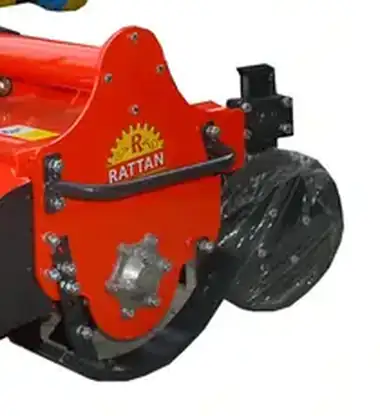
The side drive cover and the depth skid. Set both skids to the same height.
Many of the problems above come back to depth. The Rattan rotavator has an adjustable depth skid on each side. Set both skids to the same height before you start, work a short strip, then check the depth with a stick at a few points. Deeper is not always better: working too deep uses more diesel, wears blades faster and puts more load on the gearbox.
Rotavator or cultivator: when to use which
Job
Better choice
Fine seedbed in one pass
Rotavator
Chopping and mixing stubble into soil
Rotavator
Breaking up and loosening hard ground first
Cultivator, then rotavator
Light weeding between seasons
Cultivator
Short gap between paddy and wheat
Rotavator, to save passes
5-minute daily check
Grease the PTO shaft joints and all grease points
Check the gearbox oil level
Look for bent, cracked or missing blades
Tighten blade bolts and frame bolts
Clear wrapped straw and mud from the rotor
Make sure the PTO guard is in place
Safety first
Always switch off the PTO and the engine, and lower the rotavator to the ground, before you clear straw, check blades or make any adjustment. Keep people and animals well away from the rotor and the PTO shaft while it is running.
Spare blades and service
The Rattan Rotavator is built at our ISO 9001:2008 certified factory in Nabha, Punjab, with hardened carbon steel blades, an adjustable depth skid and widths of 5 ft, 6 ft and 7 ft for tractors of 35 HP and above. If you need spare blades, advice on a problem not listed here, or a new rotavator, our team is happy to help.
Need help with your rotavator?
Ask about spare blades, service or the right width for your tractor. ਤੁਸੀਂ ਸਾਡੇ ਨਾਲ ਪੰਜਾਬੀ ਵਿੱਚ ਵੀ ਗੱਲ ਕਰ ਸਕਦੇ ਹੋ।