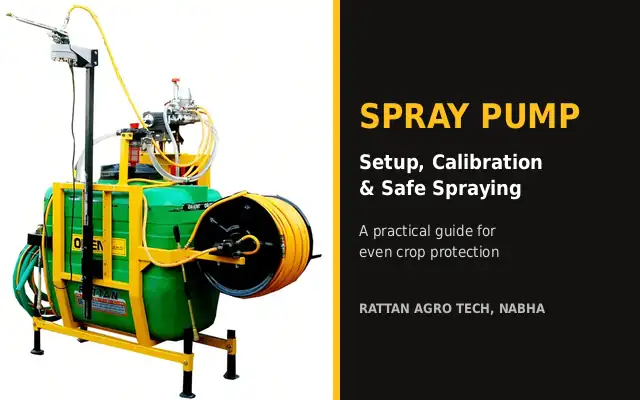
Pests and diseases can take a big share of a crop if they are not controlled in time. Spraying with a hand or backpack sprayer over a large field is slow, tiring, and the coverage is rarely even. A tractor-mounted spray pump covers wide fields quickly and puts the spray where it is needed, which means less chemical waste and better crop protection.
This guide explains how the spray pump works, how to set it up and calibrate it, how to spray safely, and how to look after the machine.
How the spray pump works
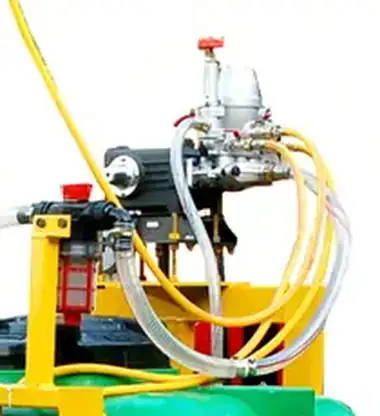
The Rattan Spray Pump is mounted on the tractor and driven by its PTO, so it needs no separate engine. The working is simple:
Before you start: check the machine
- Fill with clean water first and run the pump to check for leaks at hoses, joints and the pump.
- Filters: clean the suction and line filters. A blocked filter drops the pressure.
- Nozzles: check every nozzle sprays a clean, even pattern. Replace worn or blocked nozzles rather than poking them with a wire.
- Pressure gauge and regulator: make sure the gauge reads and the pressure can be set.
- PTO shaft: grease the joints and keep the guard in place.
- Boom: set the boom width and nozzle spacing for your crop. The Rattan spray pump has an adjustable boom width and nozzle spacing.
Calibrate with plain water
How much spray lands on each acre depends on three things: nozzle size, pressure and tractor speed. Calibrate with plain water before you mix any chemical.
- Fill the tank to a marked level with clean water.
- Set the pressure and pick the tractor gear and engine speed you will use.
- Spray over a measured strip of the field, a set length at your boom width.
- Measure how much water it takes to refill the tank to the same mark.
- Work out the litres per acre from the strip’s area.
- Adjust the speed, pressure or nozzles until you reach the water volume you need, and write the setting down.
How much chemical should you mix? Always follow the label on the product and the current recommendations from Punjab Agricultural University (PAU) or your local agriculture department for your crop and pest. Spraying more than the recommended dose wastes money and can harm the crop, the soil and you.
Tips for even coverage in the field
- Keep a steady speed and pressure. Any change alters how much lands on the crop.
- Keep the boom at the right height above the crop so the nozzle patterns overlap properly.
- Spray when it is calm, usually early morning or evening. Wind blows the spray away from the crop.
- Avoid spraying before rain, which washes the chemical off.
- Keep the solution mixed. Some products settle in the tank, so keep it agitated while spraying.
- Turn off the spray at the headland while turning so the same patch is not sprayed twice.
Safety while spraying
- Wear gloves, a mask, goggles and full-sleeved clothes while mixing and spraying.
- Read the product label before use and follow its safety instructions.
- Mix chemicals in the open air, away from children, animals and drinking water.
- Do not eat, drink or smoke while spraying.
- Never blow through a blocked nozzle with your mouth.
- Bathe and wash your clothes after spraying.
- Keep empty chemical containers away from home use and dispose of them safely.
Cleaning and maintenance
- Spray out leftover solution in the field as the label allows
- Fill with clean water and run it through the pump, hoses and nozzles
- Clean the filters and nozzles
- Grease the PTO joints
- Rinse the whole system thoroughly
- Drain all water from the pump and hoses
- Check hoses and seals for cracks
- Store under a roof, away from sunlight
Common mistakes to avoid
Get a spray pump from Rattan Agro Tech
Rattan Agro Tech builds tractor-mounted spray pumps at our ISO 9001:2008 certified factory in Nabha, Punjab, alongside our laser land levellers, super seeders, rotavators and fertiliser spreaders. For the price, specifications or help with setting up your sprayer, our team is happy to help.
Interested in a Spray Pump?
Ask for the price and specifications. You can talk to us in Punjabi or Hindi too. ਤੁਸੀਂ ਸਾਡੇ ਨਾਲ ਪੰਜਾਬੀ ਵਿੱਚ ਵੀ ਗੱਲ ਕਰ ਸਕਦੇ ਹੋ।